YOUTUBE MONETIZATION / 2027
YouTube Partner Program changes 2027: new YPP requirements explained
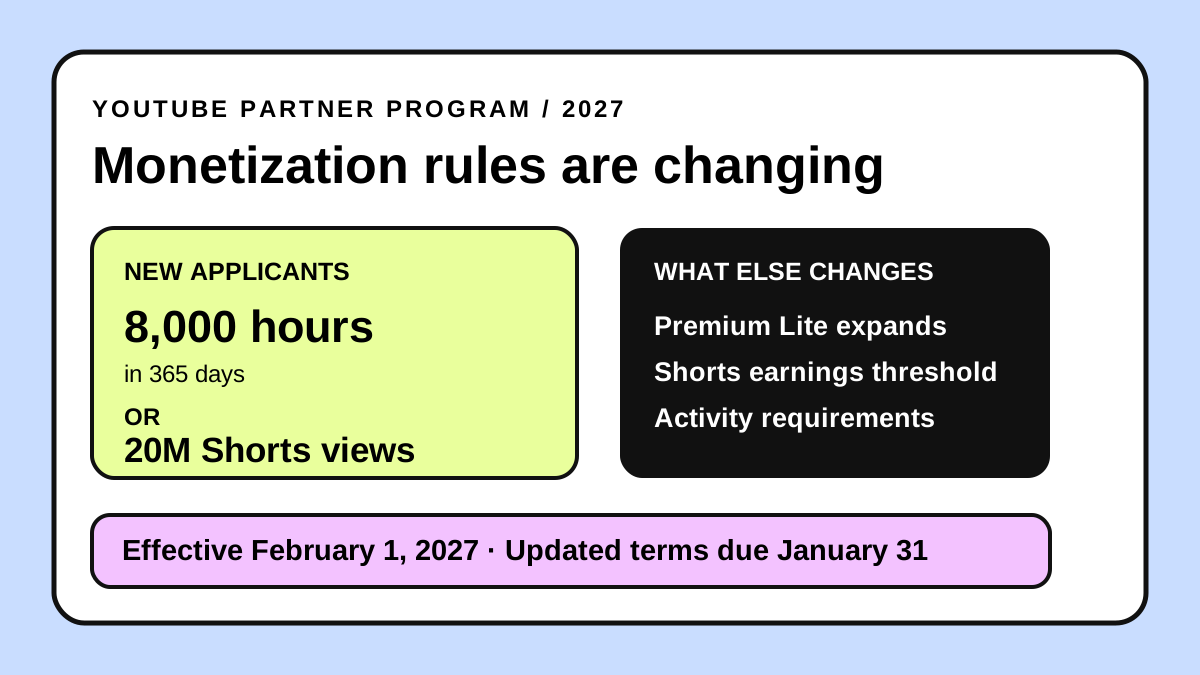
Direct answer: beginning February 1, 2027, new creators seeking YouTube ads and Premium revenue sharing will need 1,000 subscribers plus either 8,000 qualified watch hours in the previous 365 days or 20 million qualified Shorts views in the previous 90 days. Existing YPP creators are not removed by those higher entry thresholds, but YouTube is also adding activity requirements, changing Shorts revenue eligibility and expanding Premium Lite.
THE BIGGEST CHANGE
Ads and Premium become harder to unlock for new applicants
YouTube is doubling the performance thresholds for new channels applying to the ads-and-Premium tier of YPP. The subscriber requirement remains 1,000. The performance requirement moves from 4,000 watch hours to 8,000 qualified watch hours in 365 days, or from 10 million Shorts views to 20 million qualified Shorts views in 90 days.
This does not eliminate the earlier-access tier for fan funding and selected Shopping features. YouTube says those thresholds remain at 500 subscribers plus either 3,000 qualified watch hours or 3 million qualified Shorts views, together with the existing upload requirements.
New YPP entry thresholds
From February 1, 2027, a new creator seeking ad and YouTube Premium revenue sharing must have at least 1,000 subscribers and meet one of two performance routes: 8,000 qualified watch hours over the previous 365 days, or 20 million qualified Shorts views over the previous 90 days.
YouTube describes these as requirements for new creators applying for YPP. Channels already in the program keep their YPP status under this specific entry-rule change.
Shorts revenue gets a separate 10M-view condition
YouTube says creators will need 10 million qualified Shorts views in the previous 90 days to receive ads and subscription revenue sharing from Shorts. A channel that falls below that level can remain in YPP and continue earning from eligible long-form content, with Shorts revenue sharing resuming after it again reaches the threshold.
YouTube also says it plans additional incentive programs around Shopping, brand deals and trend participation, but the company has not yet published full eligibility details for those programs. Those future incentives should not be treated as guaranteed income.
Existing YPP channels get activity requirements
Starting February 1, YouTube says a channel can satisfy its activity requirement through any one of three paths: 1,000 qualified watch hours in the previous 365 days, 1 million qualified Shorts views in the previous 90 days, or recent publishing activity of at least two long-form videos or five Shorts every 90 days.
If a channel drops below the required activity level, YouTube describes an additional 90-day window to restore active status. The practical takeaway is that being already accepted into YPP does not mean every monetization condition remains permanently static.
Premium Lite adds another subscription revenue pool
YouTube is expanding Premium Lite to countries where YouTube Premium is available. The company says 60% of net Premium Lite subscription revenue goes into the applicable creator pool, compared with 30% of net Premium subscription revenue in the standard Premium pool. Creators then receive the normal revenue-share percentages from their allocated portion.
The important distinction is between the size of a subscription revenue pool and an individual creator's final earnings. A creator cannot infer a fixed payout per view from those percentages because distribution also depends on viewing activity and the applicable revenue-sharing mechanics.
2027 YPP MAP
What changes and what stays the same
| Rule | From Feb. 1, 2027 | Who it matters to |
|---|---|---|
| Ads/Premium entry | 1,000 subscribers + 8,000 qualified watch hours / 365 days OR 20M qualified Shorts views / 90 days | New applicants to the full revenue-sharing tier |
| Fan funding / earlier Shopping access | Thresholds remain unchanged | Creators using the expanded YPP entry path |
| Shorts ads/subscription revenue | 10M qualified Shorts views / 90 days to receive Shorts revenue sharing | YPP creators monetizing Shorts |
| Channel activity | Meet watch-hour, Shorts-view or upload-frequency activity route | Existing YPP channels as well as future members |
| Updated terms | Accept by January 31, 2027 | Creators who want to continue fully monetizing under the updated terms |
WHAT CREATORS SHOULD DO NOW
Use the months before February as a planning window
- Check which YPP tier you are targeting. The 500-subscriber fan-funding path and the 1,000-subscriber ads/Premium path are not the same threshold.
- Measure qualified metrics, not only public counters. YouTube's separate August 2026 view-count change makes this distinction especially important; the public number is not automatically the qualified YPP number.
- Review your format mix. Long-form and Shorts have different qualification windows, so a channel strategy built around one format may face a very different threshold than another.
- Do not assume existing membership means no action. Existing partners should check the updated terms and activity rules in YouTube Studio.
- Keep screenshots or exports of key Analytics milestones. When platform definitions change, dated records make later performance reporting easier to explain to clients and brands.
How this affects creator and brand work
YPP eligibility is not the same thing as a creator's ability to produce useful brand content. A UGC creator can be hired for production without monetizing a YouTube audience at all. For creators who also publish sponsored or organic videos, however, higher monetization thresholds can change the economics of audience-building and make brand work, affiliate revenue, Shopping and direct production fees relatively more important.
For brands, this is another reason to separate content production from audience distribution. A creator who is not yet eligible for YouTube ad revenue may still be highly suitable for producing licensed UGC assets. Our UGC workflow for brands focuses on the deliverable and usage rights rather than treating platform monetization status as a universal quality signal.
What is confirmed and what remains incomplete
Confirmed by YouTube: the February 1, 2027 effective date; 8,000-hour and 20M-Shorts-view thresholds for new ads/Premium applicants; the 10M qualified Shorts-view condition for Shorts revenue sharing; updated activity rules; Premium Lite expansion; and the January 31 terms deadline.
Still incomplete: YouTube has announced future incentive programs for Shopping, brand deals and trend participation, but detailed criteria and payout mechanics have not all been published. This article therefore does not estimate those future earnings or assume every creator will qualify.
FAQ
YouTube Partner Program questions for 2027
When do the new YPP rules start?
February 1, 2027. YouTube says creators should accept the updated terms by January 31, 2027.
Do existing YPP creators need 8,000 watch hours to stay in YPP?
No. YouTube says the higher 8,000-hour or 20M-Shorts-view entry requirement applies to new applicants. Existing channels are instead affected by separate activity and product-specific rules.
Is the 500-subscriber YPP path disappearing?
No. YouTube says the earlier-access thresholds for fan funding and selected Shopping products remain unchanged.
Do 20 million public Shorts views automatically qualify?
The rule refers to qualified Shorts views. Creators should use the qualification metrics defined by YouTube rather than assuming every public view is eligible.