CULTURE / INFLUENCER MARKETING / NOVEMBER 2026
GTA 6 and influencers: what the launch teaches creators
Direct answer: GTA 6’s launch is a useful creator-marketing case because it gave different creators different ways to participate: live coverage, creator-led stories, short-form effects and community interaction. The practical lesson for brands is to design a moment creators can interpret in their own format; results depend on audience, execution and campaign goals.
THE ACTUAL CASE
Rockstar and YouTube built several ways into launch week
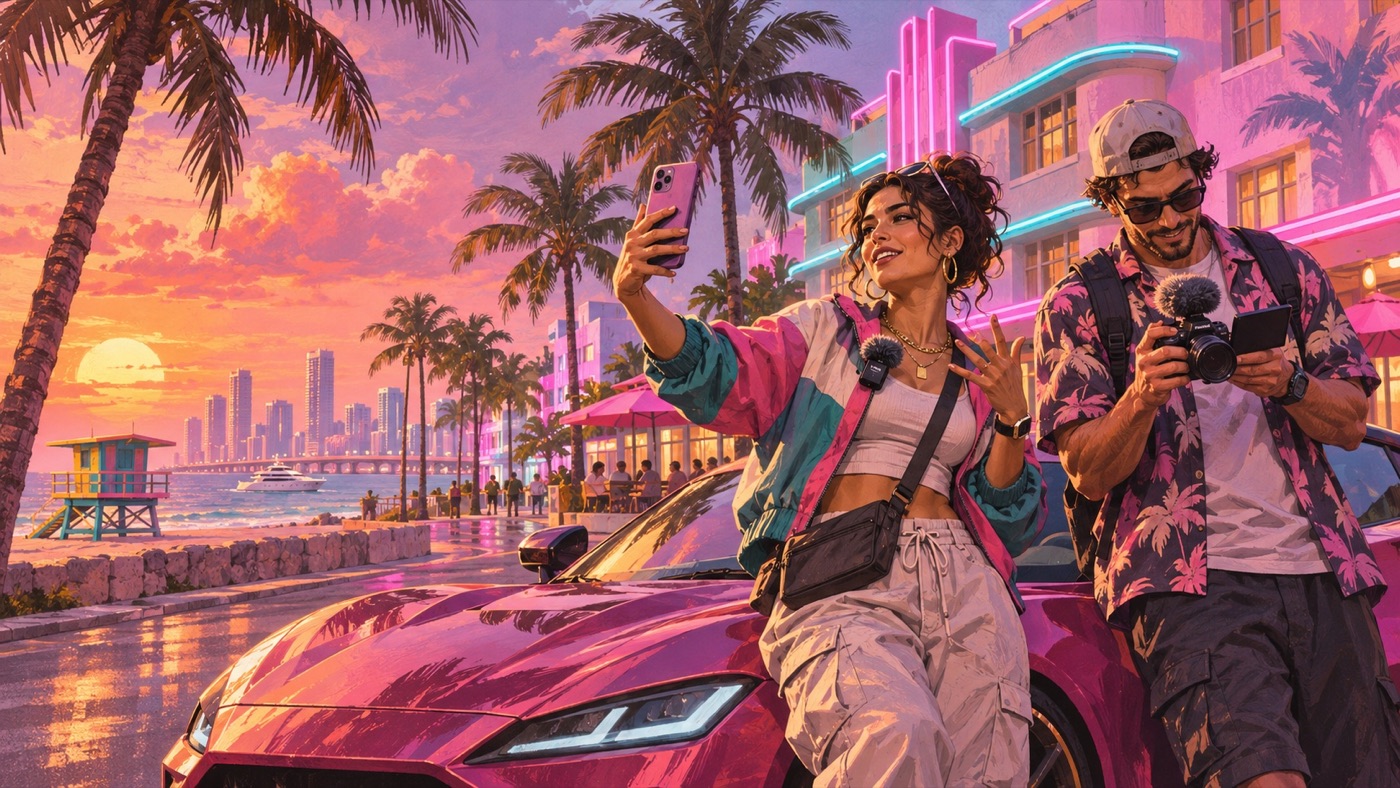
Grand Theft Auto VI became available on November 19, 2026, according to the official Rockstar site. Before launch, YouTube described a partnership with Rockstar built around creator content and interactive features: a 24-hour global livestream, selected creator streams with limited-time game-themed Live gifts, and a “Visit Vice City” Shorts effect for fan-made videos.
YouTube also reported more than 900 billion lifetime views for the Grand Theft Auto series on its platform and more than 40 billion views for pre-launch videos related to GTA VI. Those are platform-wide view totals; they describe total viewing activity rather than unique viewers, campaign reach or expected brand results. YouTube’s launch announcement ↗
Build a participation system with multiple creator roles
The activation had more than one content doorway. A live broadcast served viewers who wanted to experience the launch together. Creator-led segments gave the event multiple voices. A remixable Shorts effect let fans make their own posts. Limited Live gifts added an interaction specific to the streaming environment.
That structure matters more than copying the scale. A smaller brand can still plan a campaign with complementary roles: one creator explains the product, another demonstrates it in a real situation, and another opens a conversation with a particular community. Give each creator a recognizable, useful contribution rather than repeating one script across every account.
The in-game version of social video is a different case: our Snapmatic breakdown looks at the fictional feed and what it borrows from short-form culture.
Influencer reach and UGC production solve different problems
In the GTA 6 launch coverage, creators were part of the distribution and experience: they hosted, commented, played, interviewed or brought their own audience into the moment. That is influencer marketing’s central value—access to a creator’s relationship with an audience.
UGC production is different. A brand commissions an asset it can publish on its own channels or, if separately agreed, use in paid media. The creator may have a small audience or no posting obligation at all. Some people are both influencers and UGC creators, define each role separately in the agreement. Define whether the fee covers production, a post to the creator’s account, paid usage, raw footage or exclusivity. Our guide to UGC creators vs. influencers breaks down that distinction.
A USEFUL CAMPAIGN SPLIT
Give each format a job
Scroll to see all columns →
| Format | What it can do | What to define |
|---|---|---|
| Creator-hosted live | Make a launch or demonstration feel shared and immediate. | Run time, talking points, moderation, recording and replay rights. |
| Short-form creator video | Show one quick reaction, use case or point of view. | Hook, deliverable count, aspect ratio, revisions and posting requirement. |
| Remix or participation prompt | Give the community a repeatable way to respond. | Prompt rules, brand safety, asset permissions and how entries may be reused. |
| UGC asset for brand channels | Give the brand reusable creative for its own feed or advertising. | Channels, term, territory, paid use, edits, raw files and fee. |
WHAT A SMALLER BRAND CAN BORROW
Borrow the format logic; secure rights for every asset
- Choose one real audience moment. A product release, seasonal routine, event or customer milestone is more useful than an unrelated trend.
- Write a creative prompt instead of a word-for-word script. State the audience, message, required facts and boundaries; leave room for the creator’s natural delivery.
- Assign a purpose to every asset. Awareness, demonstration, community response and paid-ad testing are different jobs.
- Make rights explicit before filming. Separate the creator’s post from the brand’s usage. Specify duration, platforms, paid amplification, edits, exclusivity and whether raw footage is included. See our practical guide to UGC rates and usage rights.
- Measure the job you actually bought. For a creator post, review reach, qualified engagement and link actions. For a UGC asset, assess watch and conversion signals in the brand’s own placement. Views measure attention; sales lift and incrementality require separate analysis.
GTA VI names, footage, characters, music and visual identity are protected assets. Commercial campaigns require the relevant permissions. Use cleared material or original creative, and seek rights advice for a specific use.
For creators, the opportunity is a distinct point of view
A major launch can create demand for explainers, reactions, live conversation, behind-the-scenes context and short-form responses. Creators can serve a particular audience through a clear lens—accessibility, storytelling, technology, culture or production craft—while developing a style of their own.
For brand work around any cultural moment, keep paid relationships clear, state partnership status accurately and confirm permissions for every asset shown or reused. If a brand wants your audience, negotiate the post and distribution. If it wants a reusable asset, negotiate production and usage. Those are separate pieces of work.
For more on turning creative work into a buyer-friendly offer, read our guides to UGC for brands and UGC video formats.
FAQ
GTA 6, influencers and UGC
What did YouTube and Rockstar do for the GTA 6 launch?
YouTube announced a partnership featuring a 24-hour launch livestream, creator content, limited-time interactive Live gifts and a Shorts effect inspired by Vice City. The details are described in YouTube’s November 12 announcement.
Does a GTA 6 influencer campaign prove influencer marketing works?
It demonstrates a high-profile platform partnership and several participation formats. The partnership demonstrates high-profile participation formats; sales lift and results for other brands require separate evidence. Evaluate a campaign against its own objective and baseline.
Should a brand hire an influencer or a UGC creator?
Hire for the job. Choose influencer distribution when the creator’s audience and endorsement are central; choose UGC production when you need an asset for your own channels or ads. If you need both, agree and price both roles explicitly.
Can creators use GTA 6 material in sponsored content?
Commercial use of a game clip, logo, soundtrack or character requires the relevant permissions, even when the asset appears publicly online or in a creator post. Check platform rules and secure rights for the intended use.