META / CREATOR MARKETING / SEPTEMBER 2026
Meta Creator Marketing Hub 2026: what creators need to know
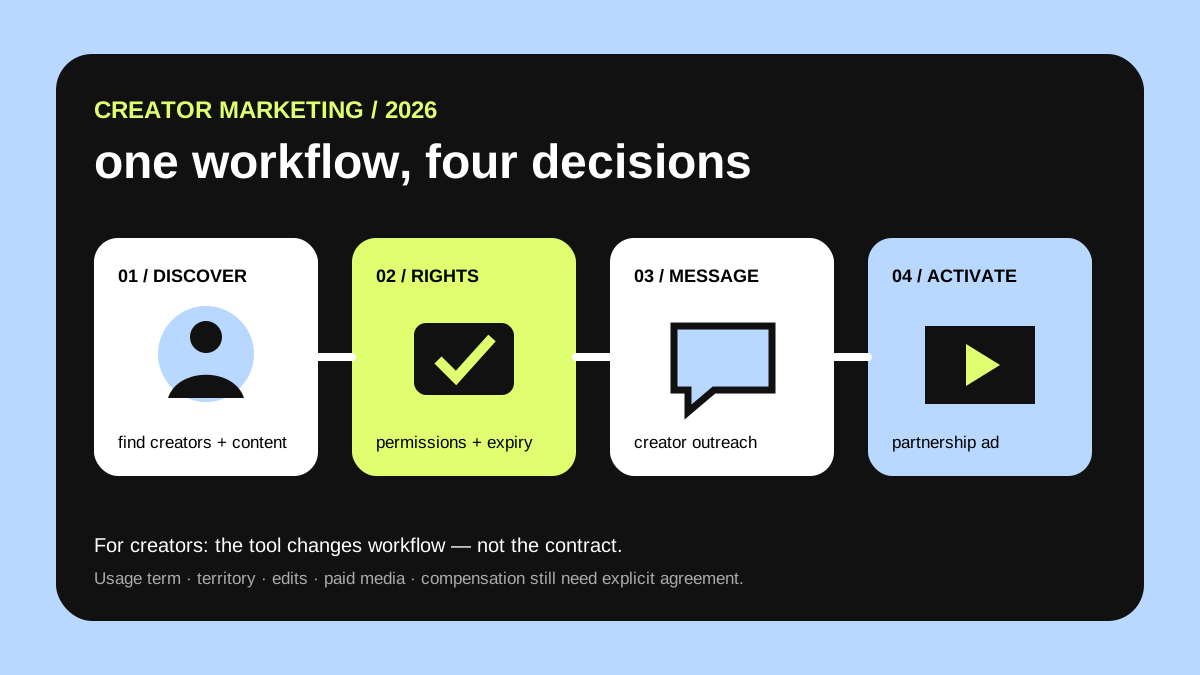
Direct answer: Meta's new Creator Marketing Hub brings creator discovery, content search, partnership messaging, post-level permissions and partnership-ad activation into one advertiser workflow. For creators, the practical change is not a new way to get paid automatically. It is a tighter path from being discovered to having approved content used in paid media — which makes usage rights, permission expiry, edits and compensation more important to define before a campaign starts.
WHAT CHANGED
Meta combined creator discovery and partnership-ad work
Meta previewed a more unified creator-marketing workflow earlier in 2026. Independent launch coverage from MediaPost and EMARKETER reports that the Creator Marketing Hub is now rolling out as a centralized surface that combines functions previously split across Creator Marketplace and Partnership Ads Hub.
The reported workflow lets advertisers search creators and organic content, communicate with creators, manage content-level permissions and expiration dates, and create partnership ads from creator listings. Facebook creators are also being added to the Creator Marketplace API alongside Instagram creators.
Discovery becomes closer to media buying
The important change is the distance between finding a creator and turning that creator's content into an ad. A brand can search for creators or relevant organic content, review recommendations and move toward a partnership-ad draft without treating discovery and paid activation as separate systems.
That can make a creator's existing public work more important as a discovery surface. It does not mean every organic post is automatically available for advertising. Permission remains a separate step.
Post-level permissions and expiry dates matter
Launch coverage describes content-level permissions with expiration dates. That is operationally useful because a brand can manage authorization for a specific asset instead of treating an entire creator relationship as one indefinite permission.
Creators should still keep their own written record of the deal. A platform permission can help execute an ad, but it does not replace clear commercial terms covering duration, territory, channels, editing, exclusivity and compensation.
Partnership messaging moves into the same workflow
Meta is also bringing partnership messaging into the Hub. For creators, that may reduce some friction between discovery and outreach, especially when an advertiser has already found a relevant post or profile.
Treat an in-platform message as the start of a brief, not the complete brief. Confirm the deliverable, deadline, revision scope, posting requirement, usage rights, paid-media term and fee before production.
Facebook creators join the Marketplace API
Meta is expanding Creator Marketplace API coverage to Facebook creators as well as Instagram creators. Agencies and creator-marketing platforms that use the API can therefore work across a broader Meta creator pool through the same integration.
This can expand discovery beyond Instagram, but it does not guarantee that every creator account, country or feature is immediately eligible. Product access should be verified in the actual account rather than inferred from a global announcement.
CREATOR CHECKLIST
What to confirm before approving paid use
| Term | Question to answer | Why it matters |
|---|---|---|
| Asset | Which exact post, video or live is approved? | Prevents a broad permission from being mistaken for rights to unrelated work. |
| Duration | When does paid usage start and end? | Platform expiry should match the commercial agreement. |
| Territory | Where may the ad run? | Global paid distribution can be materially broader than the original organic audience. |
| Editing | Can music, stickers, captions or cuts be changed? | Ad-readiness edits can alter the delivered asset. |
| Compensation | Is paid-media usage included in the creation fee? | Creator production and media usage are different commercial rights. |
| Exclusivity | Does the campaign restrict competitor work? | Exclusivity can affect future creator income. |
SEPTEMBER 29
Instagram live video partnership ads are the next announced step
MediaPost reports that Meta plans to expand live video partnership ads to Instagram on September 29, 2026. That would let brands amplify a creator's live content as a partnership ad, extending a format already used on Facebook.
This is a future-dated rollout, not something to describe as universally available today. Creators planning sponsored lives should confirm feature availability in their account and agree in advance on whether the live can be amplified, for how long, in which markets and with what editing or reuse rights.
What the Hub does not appear to add
The launch should not be confused with a universal affiliate or automatic creator-payment system. The sources reviewed describe discovery, content recommendations, messaging, permissions, APIs and partnership-ad activation. They do not establish a new standard creator commission rate, automatic payment for every use, or guaranteed campaign attribution.
That distinction matters for UGC creators because many deals are paid for production and usage rather than audience distribution. Our UGC rates guide explains why creation fees and usage rights should be separated, while UGC creator vs influencer explains the difference between making an asset and selling access to an audience.
What is confirmed, reported and still uncertain?
Confirmed in multiple independent launch reports: Meta launched Creator Marketing Hub in mid-September 2026, combining creator discovery and partnership-ad functions; content-level permissions and expiration dates are part of the workflow; Facebook creators are being added to the Creator Marketplace API; and Instagram live partnership ads are scheduled for September 29.
Supported by Meta's earlier first-party material: Meta had already described expanded Creator Marketplace and Partnership Ads tools as part of its 2026 creator-marketing work.
Still account-dependent: exact availability by creator, advertiser, market and API integration. We did not find a dedicated first-party Meta launch post for the September Hub release during this review, so feature-level launch claims above are cross-checked against multiple independent industry reports rather than presented as if a Meta release supplied every detail.
PRACTICAL TAKEAWAY
Use the faster workflow without giving away ambiguous rights
- Keep your public portfolio and posted work easy to understand by niche and format.
- Ask which exact asset a brand wants to use in paid media.
- Put duration, territory, editing, exclusivity and compensation in writing.
- Match any in-platform permission expiry to the contract term.
- Save the brief and final approval outside the platform too.
- For live campaigns, verify Instagram partnership-ad availability before promising paid amplification.
For the broader brand-side process, see UGC for brands. Creators building the asset library brands may discover can use the UGC portfolio guide and UGC video guide.
Sources
MediaPost, September 15, 2026 — launch coverage of Creator Marketing Hub, Facebook creator API expansion and Instagram live partnership ads.
EMARKETER, September 16, 2026 — independent description of the centralized workflow, discovery filters, permissions and partnership-ad activation.
Meta, March 2026 — earlier first-party description of expanded Instagram Creator Marketplace and Partnership Ads Hub tooling.
IAB Global Creator Week — event context for the September 14–18 creator-marketing week.