CREATOR MUSIC / AUGUST 2026
YouTube Creator Music paid licenses ended: what creators need to know
Direct answer: YouTube stopped new paid Creator Music licenses after August 10, 2026. Creator Music is now shifting toward tracks offered at no cost and tracks available through revenue sharing. Paid licenses already applied to videos remain valid until they expire, while unused paid licenses are set to be refunded automatically.
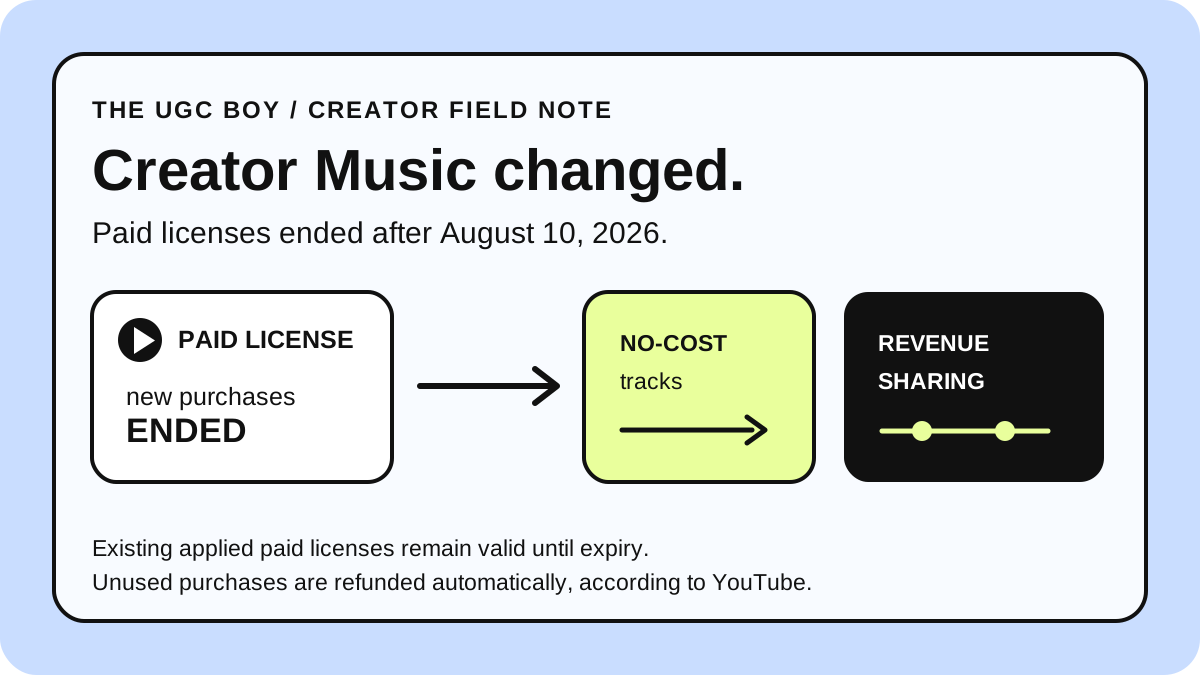
WHAT CHANGED
The paid-license purchase window is over
YouTube's creator-facing help page says paid licenses are being phased out and that creators had until August 10, 2026 to purchase and use them. The platform says Creator Music will focus on music available at no cost and music available under revenue-sharing terms set by rights holders.
This is a change to the licensing options inside Creator Music, not a blanket removal of music from YouTube. The practical question for creators is no longer simply “what does this track cost upfront?” but “is this track free to license, available for revenue sharing, or unavailable under either option?”
Already applied a paid license? It stays valid until expiry
YouTube says paid Creator Music licenses that were already applied to videos remain valid until the end of their existing term. That means the August 10 cutoff does not automatically cancel a properly applied license on an existing video.
Creators should still keep the original license details and expiration date with the project record. A paid Creator Music license was tied to its own usage terms, so the relevant end date is the license term, not simply the date YouTube stopped selling new paid licenses.
Bought a paid license but never used it? YouTube says it will be refunded
YouTube's guidance says purchased licenses that were not used by August 10, 2026 will be automatically refunded. If a creator had a license sitting unused in the Creator Music library, the expected outcome is a refund rather than an indefinite unused entitlement.
Because refunds can involve payment-processing timing, creators who had an unused purchase should verify the transaction history in their own account rather than assuming that a refund appearing instantly is part of the policy.
No-cost tracks remain part of Creator Music
Creator Music is not becoming a revenue-sharing-only catalog. YouTube says the service will focus on tracks available at no cost as well as tracks available for revenue sharing. On the rights-holder side, YouTube describes the post-cutoff licensing strategy as gratis, or free, licensing.
For creators, “no cost” does not mean “no terms.” Before using a track, check the usage details attached to that music. Music rights, permitted use and platform-specific restrictions still depend on the track and the rights holder.
Revenue sharing becomes a more important path
For tracks marked as eligible for revenue sharing, the creator can use the track under the applicable Creator Music terms and share video revenue with the music rights holders. YouTube's current help documentation explains that the creator's normal watch-page revenue share is adjusted when revenue-sharing music is used.
The exact economics depend on the track and the video. That makes the track's usage panel more important than a generic rule of thumb: creators should review eligibility, supported regions and the revenue-sharing terms before editing a song deeply into a video.
BEFORE / AFTER
How the Creator Music choice changed
| Scenario | Before the cutoff | After August 10, 2026 |
|---|---|---|
| New paid license | Could be purchased for eligible tracks | No new paid-license purchases |
| Existing paid license already used | Valid under its term | Remains valid until expiration |
| Unused purchased paid license | Could be held for a future video | YouTube says it will be automatically refunded |
| No-cost track | Available for eligible music | Remains a core Creator Music option |
| Revenue-sharing track | Available for eligible music | Remains a core Creator Music option |
CREATOR WORKFLOW
What to do before choosing music for a new video
- Open the track's current usage details. Do not rely on an old screenshot, saved price or previous video's terms.
- Identify the option actually offered now. Check whether the track is available at no cost, under revenue sharing, or not available under either route.
- Check where and how the music can be used. Creator Music terms can be specific to content type, channel and supported regions.
- Model the economics before editing. A no-cost license and revenue sharing are different commercial choices even though neither requires the old paid-license purchase flow.
- Keep a record of the terms used for the upload. Save the relevant license or usage details with the project so the rights decision is auditable later.
What this does not mean
The change does not mean every track in Creator Music is free, that every song can be used without restrictions, or that revenue sharing automatically applies to any commercial song. YouTube says rights holders set the availability and usage details for tracks, and some music may not be eligible for licensing or revenue sharing at all.
It also does not turn a Creator Music license into ownership of the song. A creator is receiving permission under defined terms, not acquiring the underlying recording or composition.
Why this matters for UGC and brand creators
For creators producing UGC-style brand videos, music clearance needs to be treated as part of the usage-rights workflow, not as a last-minute edit choice. A creator may be making an asset for a brand's own account, paid media or another distribution plan, while Creator Music permissions can be specific to YouTube and to the creator's channel.
If a brand needs an asset that can travel across platforms, confirm music rights separately before delivery. Our UGC workflow for brands explains why distribution and usage rights should be defined before production, while the UGC rates and usage-rights guide covers how licensing scope changes the commercial brief.
FAQ
Creator Music paid-license questions
Can I still buy a paid Creator Music license?
No. YouTube says creators had until August 10, 2026 to purchase and use paid licenses. The post-cutoff model focuses on no-cost tracks and revenue-sharing tracks.
Will an existing paid license disappear from a published video?
YouTube says paid licenses already applied to videos remain valid until their expiration.
What if I bought a license but never used it?
YouTube says purchased paid licenses that were unused by August 10, 2026 will be automatically refunded.